When will the blame game stop?

I’m a public transport tragic (or, railfan), and I especially love studying several aspects of public transport: the operations, economics, signaling, communications, planning, history and equipment. And now living in a city with generally good public transport, I’m having a lot of fun.

But I’m also getting frustrated and upset when things don’t work the way they should.

I’m not talking about delays and cancellations, fares and ticketing, stop-spacing and timetabling, or even overcrowding. What I’m getting most frustrated about in Melbourne at the moment is this strange problem the Victorian government has where they seem to think they can outsource their problems.

If you missed the lead story in Melbourne’s news today, check out the latest article in The Age. Every single electrified train line in the Melbourne network (which is every single line bar one) had multiple cancellations, and delays upwards of 60 minutes, throughout the morning peak this morning. It cost an estimated $12 million in lost productivity and directly cost Melbourne’s train operator, Metro, $1 million in government fines (and possibly more with the cost-sharing of a free-public-transport day this Friday).

Seems fair – the city’s trains grind to a halt, and everyone takes their cars into work causing doubling of peak-hour road travel times which in turn blows out tram and bus timetables. It was a pretty tough morning if you needed to get anywhere and don’t happen to own a pair of wings.

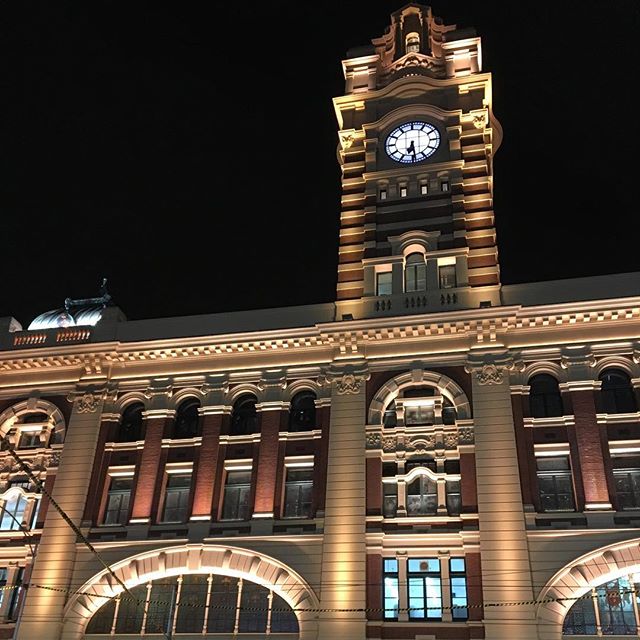
Yes, it seems fair to blame and fine the train operator. Except the problem started with electrical wiring at 4:55am this morning near Southern Cross Station, one of the city’s busiest. As a train with 20 passengers on board traveled underneath, the wire overhead suddenly snapped, failed, or got tangled – depending on which news report you read – and took out all power bar emergency lighting at the Southern Cross station. Because no trains could then travel through Southern Cross (which all trains on the Melbourne metropolitan train network must), a bank-up of trains started and steadily grew, right into peak hour when power was finally restored. However, it was already too late – services had been cancelled and delayed and there were too many services to run and not enough time to run them in. The problems extended right through peak hour and continued until late morning.

So, whose fault was it?

Well, the exact details are scarce, and I hope we’ll see more in tomorrow’s papers. But if you ask the government, it’s Metro’s fault, and if you ask Metro, well, they’re apologising, then saying they’re sorry, then apologising again.

The maintenance of all electrified track in Melbourne is the responsibility of Metro. But they only took over the contract to manage and operate Melbourne’s train network at the start of December last year, after warning in their management tender that “many of the older track components are in a condition which does not provide the level of reliability and ride quality that is required by a modern metro system” (according to a Herald Sun article from earlier this year). Metro have now had control of Melbourne’s 16 train lines – made up of 200 stations and 830km of railway track – for less than 8 months, in which time they’ve been continuously held to account by the government to run on-time services for 20 hours every day. They’ve done a good job, but due to equipment faults, unruly passengers and “police requests”, they haven’t yet met targets on an out-of-date, inherited system that has been mismanaged – and likely underfunded – for decades.

But it’s still Metro’s fault. It’s their branding on the train, so even though they’re not in control of these problems which have plagued the Melbourne train network for years before they won the contract to manage it, the government can take the convenience of outsourcing the problems as well as the management (and fining Metro when it’s not all magically fixed).

Am I missing something really huge, or does this state government deserve no votes on the 27th November?

I can hardly believe it

What a day. “Momentous” is the word people are using to describe it, which is apt given it means ‘significant’ and ‘important’. The holder of the highest office in our land (at least, that with any real power) changed – seemingly overnight. It wasn’t until most of us got into bed last night that the news was becoming real, and it’s entirely probable that many returned home from work today knowing nothing, went to watch the 6pm news, and discovered we had already had a new prime minister for the last 6 hours.

The events of the momentous day were evident everywhere. One of my bosses, who gets a headache when he hears anything of politics, said today that not only would he ‘allow’ us to talk about the leadership change, but that we ‘must’ talk about it. I spent the first part of the morning watching Twitter – and Twitter only – on my iPhone in order to feed updated information to one of my other bosses – Clayton Bjelan – who anchors the weekday morning shift on LightFM. And when I got home and watched the news, my housemates joined in for the first half of the bulletin (which is unusual).

With each new person I saw today, the first thing said was something to do with the leadership spill – that is, after the first pause while both of us had to work out how to start the conversation without asking the painfully obvious “So, did you hear what happened to Rudd?”

The change of a prime minister is huge, so of course it has to be talked about by political tragics and phobics alike. But the way it happened was an even bigger event. Here’s some of my thoughts.

Today’s machinations have ultimately cheapened the office of Prime Minister

That’s a direct quote from a tweet posted by comedian Daniel Burt tonight. It echos my flabbergasted thoughts exactly, which is why I retweeted it and am quoting it again now. I used to look at the office of Prime Minister as one affording respect, and requiring some sort of longevity. But now, it’s just another political job that can be held by one person one day, and someone else the next (much like an opposition leader).

I don’t know if I could now ever see it the same as I saw it growing up, with the role filled – for a very long time – by John Howard.

Social media is a news breaker

I probably say this too much, but social media (especially Twitter) was amazing throughout this whole episode. Twitter broke last night’s news to me, and kept me updated throughout the day, particularly when I had to be in a meeting during all three of the leader’s press conferences (Rudd, Gillard, and Abbott).

Given that prominent journalists also tweet regularly (I mainly follow Latika Bourke & Malcolm Farnsworth), Twitter breaks news (and takes you right to the source) before any other media can (even with live TV, it’s only a couple of seconds behind AND provides live commentary too).

Oh, and today’s newspapers were out of date and useless by about 9:15am.

24 hours is a long time in politics

Forget ‘a week’. Like I said, if you didn’t watch the news after 6:30pm last night, 24 hours was a very long time for you today.

I find the political definition of loyalty chilling

That, was tweeted by Simon Thomsen tonight. And again, it echoes what I couldn’t have said any better myself. This morning, one news report said that Wayne Swan’s loyalty was with Kevin Rudd, but that he’d now moved his loyalty to Julia Gillard. Uh-huh. Some loyalty.

The time of adjustment and the stages of grief

Once I had a look at pm.gov.au and saw the maintenance page, that was when it home to me. We just changed prime ministers. Again. For just the 3rd time in my living memory (and 4th since I was born). And with that comes an adjustment time – of learning to associate the title ‘prime minister’ with the new person, and of learning to respect – and respond to the leadership of – the person in the role.

And today I found myself going through some of the stages of grief. Even though I really didn’t like Kevin Rudd at first, I did really warm to him as a person. Despite disagreeing with probably a majority of his policies, I still had a respect for him and especially for his leadership capability, and for his down-to-earth nature on the rare moments that he allowed it to show through the usual Ruddbott. I liked him. I looked up to him. Today, I was in disbelief, denial, and anger, and am now probably just edging closer to some sort of acceptance.

I had to stop and reflect quietly after glimpsing Kevin Rudd sitting on the backbench in Question Time this afternoon.

I like Julia Gillard even less than I first liked Kevin Rudd

Which, as I said, wasn’t much at all – at first. Seeing Julia Gillard on the 7:30 Report tonight just sickened me. She failed to answer most of Kerry O’Brien’s questions – granted, they were provocative, but they were what we all wanted to know the answer to – and she just turned on the new Gillard robot.

I wasn’t impressed. At a time like this, we want to know the new woman-in-charge is going to be honest with us. She’s our Prime Minister, after all.

And I don’t think I trust her. I find it hard to believe she’s in the job to help people, as she likes to quote.

But I do believe that Rudd’s first concern was for the country, and the stable governance of it, rather than for himself.

I think I’m in the bargaining stage of grief now – bargaining on Rudd’s behalf. If only he had said one or two things differently a few days ago – if only.

I attempted to give blood… but I have trypanophobia

I tried, I really did!

Earlier today I visited the Red Cross Blood Service donor centre in Ringwood, Victoria, after deciding that despite a fear of needles, I still owe it to other people to donate my blood to save lives.

I was doing some reading beforehand, and discovered that the fear of needles is actually a known, documented and named phobia: trypanophobia. And today, my trypanophobia got to me.

Here’s my video blog of the afternoon, which follows exactly what happened on my first attempt at giving blood!

I haven’t decided yet whether I will try again. But I am afraid now that my trypanophobia will cause me to reject potentially live-saving medical treatment should I need it in the future… so I really need to work out how to cure myself!

Needles make me faint, but I’m finally becoming a donor

Needles make me faint.

I first found this out in grade six. We were heading to get those essential Hepatitis B injections, which required walking past many school buildings to get from our upstairs grade six classroom to the library. There, was a makeshift injection centre. This was going to be my first injection in many years – in fact, probably my first injection at school alone without my mum beside me.

I was feeling a little worried. That worry probably largely had something to do with the older kids telling me that I’d be able to feel the fluid pumping through my veins. I was told it would hurt more than any other injections I’d had before. And I didn’t really understand what it would be doing to my blood stream. I think as far as I was concerned, there was this fluid entering me and it wasn’t supposed to be there. It was certainly enough to worry an anxious 11 year old kid!

I got the injection. It pricked and hurt a little, but other than that I was fine. I waited about for about 20 minutes in the library as the rest of the class had their jabs, and we then took the walk back to the classroom. I sat down and quietly continued my work.

A short time later – probably about 5-10 minutes – the worry about the injection must have got the best of me. I started to feel a bit light-headed, and then pretty dizzy, so I got up to ask the teacher if I could take a rest. That’s all I remember… the next moment, everything was black and I could hear commotion: “Tim fainted! Is he ok? Tim, here’s your glasses.” It turns out I had started swaying as I was walking up to the front of the room, and I eventually went down in front of the blackboard, hitting my neck on the way down. Apparently my eyes were open – although I could not see. I could hear, but not respond. It took at least 20 seconds for me to come back into it, and I was probably out for around 20 seconds before I fell as well.

A similar episode happened some time later at home when I had to take a nasal spray. I had never taken a nasal spray before, and I thought it was a pretty weird place to be spraying something. Once again, I blacked out, walked and swayed for some time, and ended up on the floor.

After speaking to my doctor, it became clear that it was nothing in the medication or the injection that made me faint – it was simply psychological. I was scared about a procedure that I hadn’t had before, or didn’t fully understand, and perhaps, I just couldn’t cope with that.

This happened in grade six. But ever since, I have hated needles. I have been avoiding them wherever possible (including avoiding an injection I should have taken before a visit to Thailand). And when a jab was absolutely essential I would make sure I had a long period of lying down afterwards.

Whenever the question of donating blood came up, I’d say it’s not for me. I’m happy to donate my time and my money, but my blood? No, not if it requires a needle.

But… donating blood saves lives. I hadn’t really thought that being just a little uncomfortable for about twenty minutes, less than 5 times a year, could save people who I will probably never know.

And for me, it’s simply my view of the world that says to me: if it’s possible to donate my blood to benefit other people, then it is something I should be doing.

The other day, I took the interactive eligibility test – passed it with flying colours – and am now waiting for contact from a Red Cross Blood Service representative. My closest donor centre is in Ringwood, Victoria and I’ll probably be heading there real soon. I’ll just make sure I lie down for 20 minutes afterwards, and take the train home just in case.

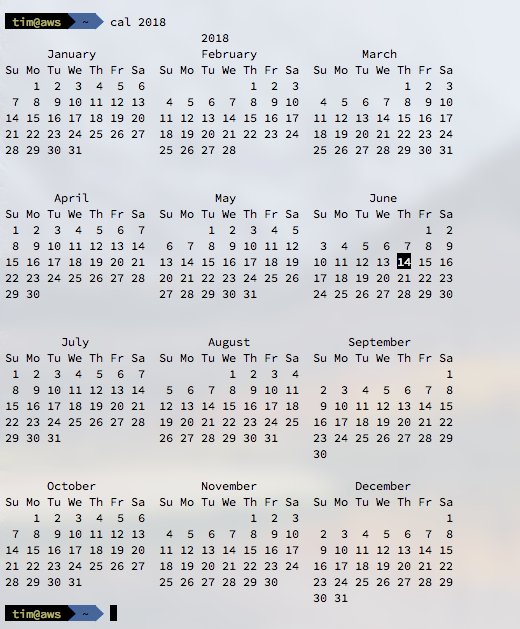
World Blood Donor Day is Monday 14th June 2010. You can donate blood online at donateblood.com.au.

Tony Gattari on small business

I’m a bit late getting this up, but hey, it’s timeless information so better late than never!

About a month ago on 89.9 LightFM, I spoke to Tony Gattari ahead of his visit to Melbourne for the Cre8 Kingdom Business conference.

Tony, as a self-described “firebrand 27-year-old”, was, under the leadership of Gerry Harvey, responsible for taking Harvey Norman’s communications division from a $12 million turnover to an incredible $565 million in just nine years. Now he runs the Achievers Group, where he helps business owners reach their potential.

In this interview, we talked about Tony’s experience at Harvey Norman – where his story shows that although he started off at a fairly naive position (something I’m sure he wouldn’t mind admitting!), he was able to achieve some pretty cool things. My point: if you think that you haven’t got what it takes to succeed in business, take a look at stories like Tony’s to remind you of the humble beginnings many of our high achievers came from.

In the interview, Tony also gave advice for small business owners on business survival, work/life balance, and involvement in partnerships.

You can listen to the entire interview with Tony below, or if you’re short on time, I’ve transcribed some of his key ‘nugget’ advice points.

Audio clip: Adobe Flash Player (version 9 or above) is required to play this audio clip. Download the latest version here. You also need to have JavaScript enabled in your browser.

(download file – 9.5 MB, 6:55)

  • One of the biggest issues in business is cashflow
  • Tony’s premier advice to small business owners: “Turnover is vanity, profit is sanity, cashflow is reality”
  • Many business owners overestimate what they’re going to do in the short term, and under estimate what they’re going to do in the longterm
  • What ever you think you’re going to make in the first year, halve it, and halve it again – if you can survive on that sort of income, then you may well be successful in business
  • If you’re in a partnership because you need money – go and see a bank. If the partnership is based on a shared vision, then that’s a good reason to do it.
  • Don’t go into partnership based on skills – do it based on attitudes, belief and character